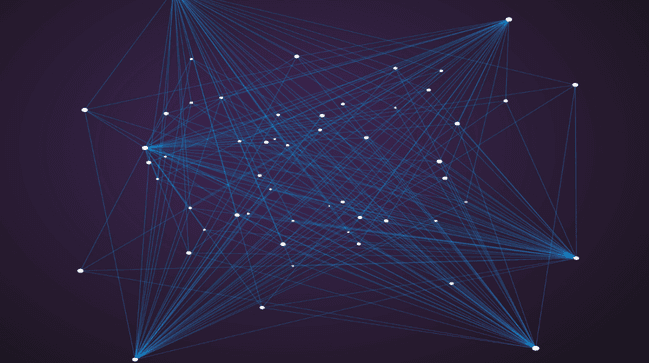
Relational Table vs Graph Databases for Ontologies
Moving Beyond Tables to Meaningful Relationships
Organizations have relied on relational databases for decades.
From transaction systems to analytics platforms, data is stored, processed, and queried using tables, rows, and columns. The model is scalable, reliable, and well understood.
But as data becomes more interconnected, and modern systems demand AI-driven capabilities that require deeper understanding, a fundamental question arises:
Are Relational Tables Enough to Represent Meaning?
The Assumption: Tables Can Represent Relationships
Relational databases are built on the idea that relationships can be modeled using:
- Primary Keys
- Foreign Keys
- Join operations
Different tables can be linked together, and queries can reconstruct relationships when needed.
However, some important limitations are present:
- Relationships are not stored as first-class entities; they are reconstructed at query time.
- For simple queries, this is manageable. For ontologies, it's a fatal flaw.
Ontologies need to express:
- Hierarchies that change
- Relationships with context
- Concepts that inherit from others
- Rules that apply across domains
Traditional tables flatten all of these into keys, and every new requirement means another migration.
It’s not a data problem, it’s a structure problem.
When Relationships Become the Core Problem
In many modern systems, relationships are not secondary They are the system.
Relational databases can model structures, but only through increasingly complex joins.
As relationships grow:
- Queries become harder to write
- Performance slows
- Understanding becomes fragmented
When a concept like “risk” depends on relationships, not attributes, tables have no native way to represent it.
Teams are forced to:
- Add more columns
- Hard-code logic
- Denormalize data
It works for basic reporting, but not for reasoning.
The result:
- Ontologies become static ER diagrams, not living models.
- Business changes require schema changes.
- AI cannot traverse meaning.
The Better Model: Graph Databases Model Relationships Explicitly
Graph databases take a fundamentally different approach.
Instead of storing data in tables, they represent data as:
- Nodes (entities)
- Edges (relationships)
- Properties (attributes)
Relationships are not reconstructed,They are stored directly.
Graph structures are designed to handle highly connected data efficiently and allow rapid traversal of relationships, even as complexity increases.
To make ontologies usable, enterprises need to shift the underlying structure from tables to graph databases.
This transforms fragmented schemas into connected meaning.
Why This Matters for Ontologies
An ontology is not just a data model it is a representation of meaning.
It defines:
- How things exist
- How they relate
- What rules govern them
Relationships are foundational, not optional.
Trying to represent an ontology in relational tables creates friction:
- Relationships become implicit
- Context is lost in joins
- Meaning is distributed across multiple tables
The structure may be “correct,” but the meaning is hard to understand or query.
Structure vs. Meaning
Relational systems enforce consistency, constraints, and well-defined schemas.
But ontologies require expressive relationships.
Graph-based models align more naturally with this need because:
- Context is preserved
- Connections are navigable
- Relationships are explicit
With graph guardrails:
- Relationships are first-class citizens
- AI traverses meaning, not foreign keys
- Traversal paths are consistent and explainable
Graphs as an Explainability Layer
Explainability is a growing requirement for enterprise AI.
Stakeholders don’t just want an answer they want to understand why.
- Why was the relationship inferred?
- What rules were applied?
- Who defined this hierarchy?
- What concepts were traversed?
Without graphs, this explainability is limited.
Ontologies become hard to interpret and justify.
With graphs:
- Reasoning paths can be visualized
- Outputs can be validated against the ontology
- Relationships between concepts are explicit
Such a system can be trusted and governed.
Why More Tables are Not the Answer
The default response is often to add more tables.
But more tables without better structure increase only complexity. This introduces:
- More edge cases
- More ambiguity
- More join paths
Instead of improving things, it increases fragility.
The Hidden Cost of Relational Modeling
When ontologies are forced into a relational structure, organizations compensate by adding:
- Application-level logic
- Repeated data transformations
- Custom query layers
This creates:
- Complex data pipelines
- Inconsistent interpretations
- Higher maintenance costs
It works, but becomes harder to scale and reason about.
Graphs as a Foundation for Semantic Systems
Graph databases are not just different storage options, they represent a more natural way to model data for meaning.
Instead of asking, “Where is the data?” they let us ask, “How are these things connected?”
This is critical for:
- Knowledge graphs
- Context-aware pipelines
- AI reasoning systems
Because meaning exists in relationships.
A Practical Perspective
Don’t replace relational databases entirely.
They are essential for:
- Structured data storage
- Transactional consistency
- Operational systems
But as organizations adopt AI-driven solutions,
the limitations of the relational model become visible.
Systems need to:
- Enable understanding and reasoning
- Preserve context
- Understand relationships
Ontology readiness isn’t just a database problem, it’s a meaning problem.
Ontologies won’t just document the business;
they’ll enable explainable, consistent, and reusable intelligence.
Final Thoughts
- Relational tables organize data.
- Graph models connect it.
- Connection is where meaning lives.
Data alone isn’t enough.
Understanding comes from how things relate.
Most organizations try to make their schemas “smarter.”
Few make them understandable.
But clarity is what intelligence depends on.
AI doesn’t need more tables, It needs better relationships.